

Context
Amnesty International's Citizen Evidence Lab needed to scale their human rights research by engaging global volunteers. Traditional methods couldn't process the volume of satellite imagery, social media content, and documents required for modern investigations.
How might we enable anyone, anywhere to contribute meaningfully to human rights research through simple micro-tasks, while ensuring data quality and volunteer engagement?
Process
- Ran discovery workshops with researchers to define project goals and sketch interface concepts
- Created user journeys and stories to map volunteer interactions and feature requirements
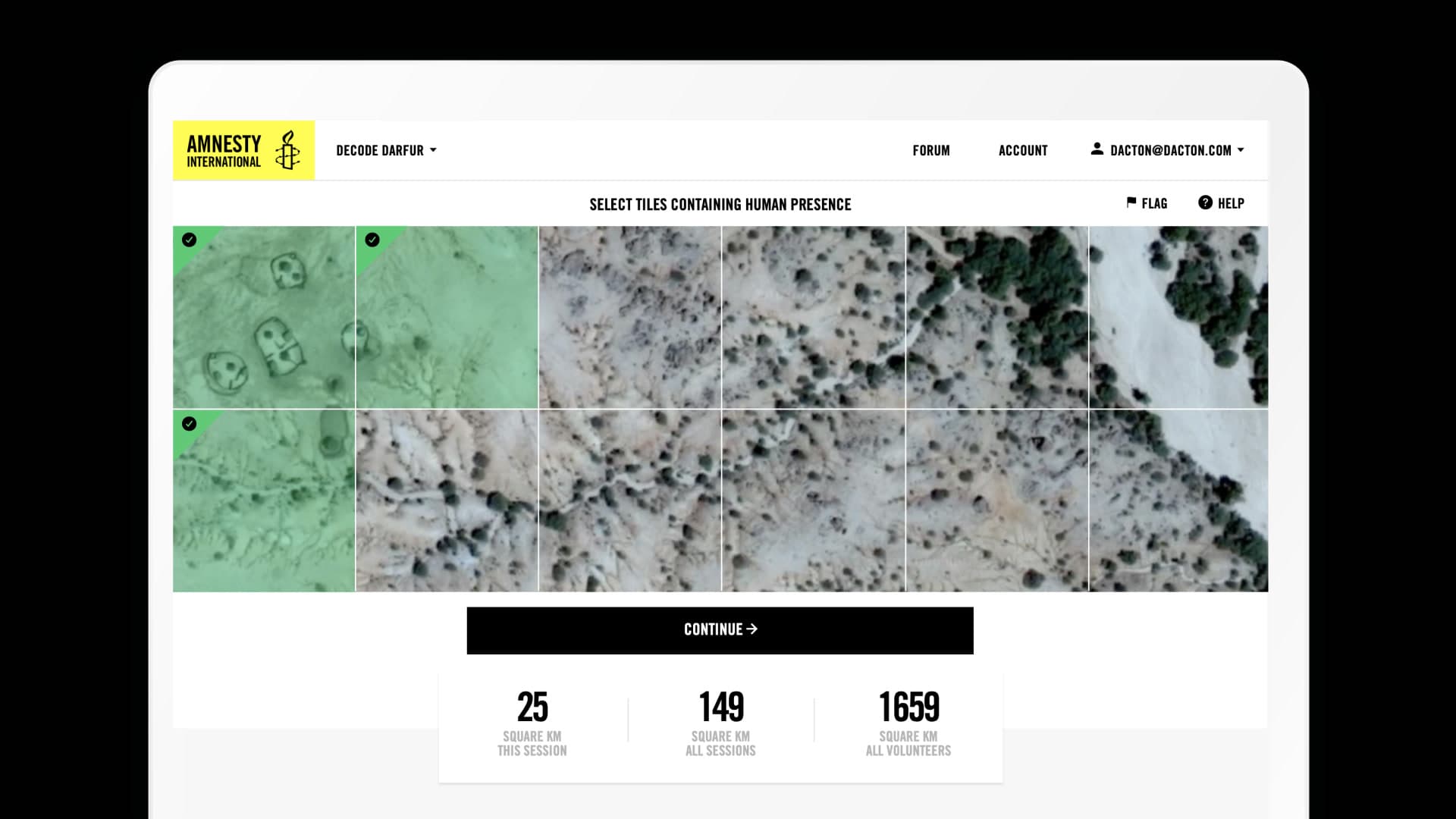
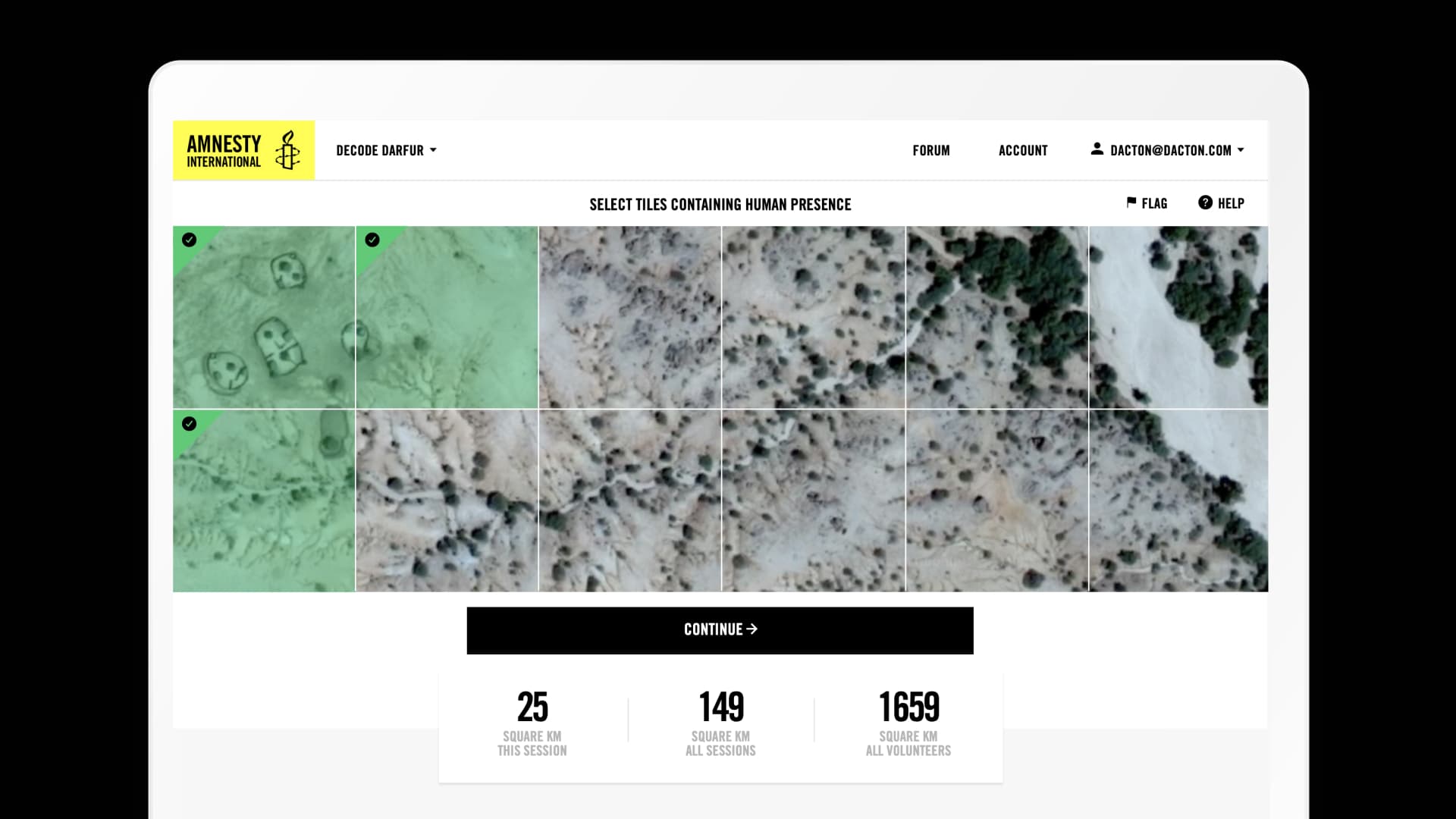
- Designed the Amnesty Decoders platform for crowdsourced micro-tasks like analysing satellite imagery and verifying documents
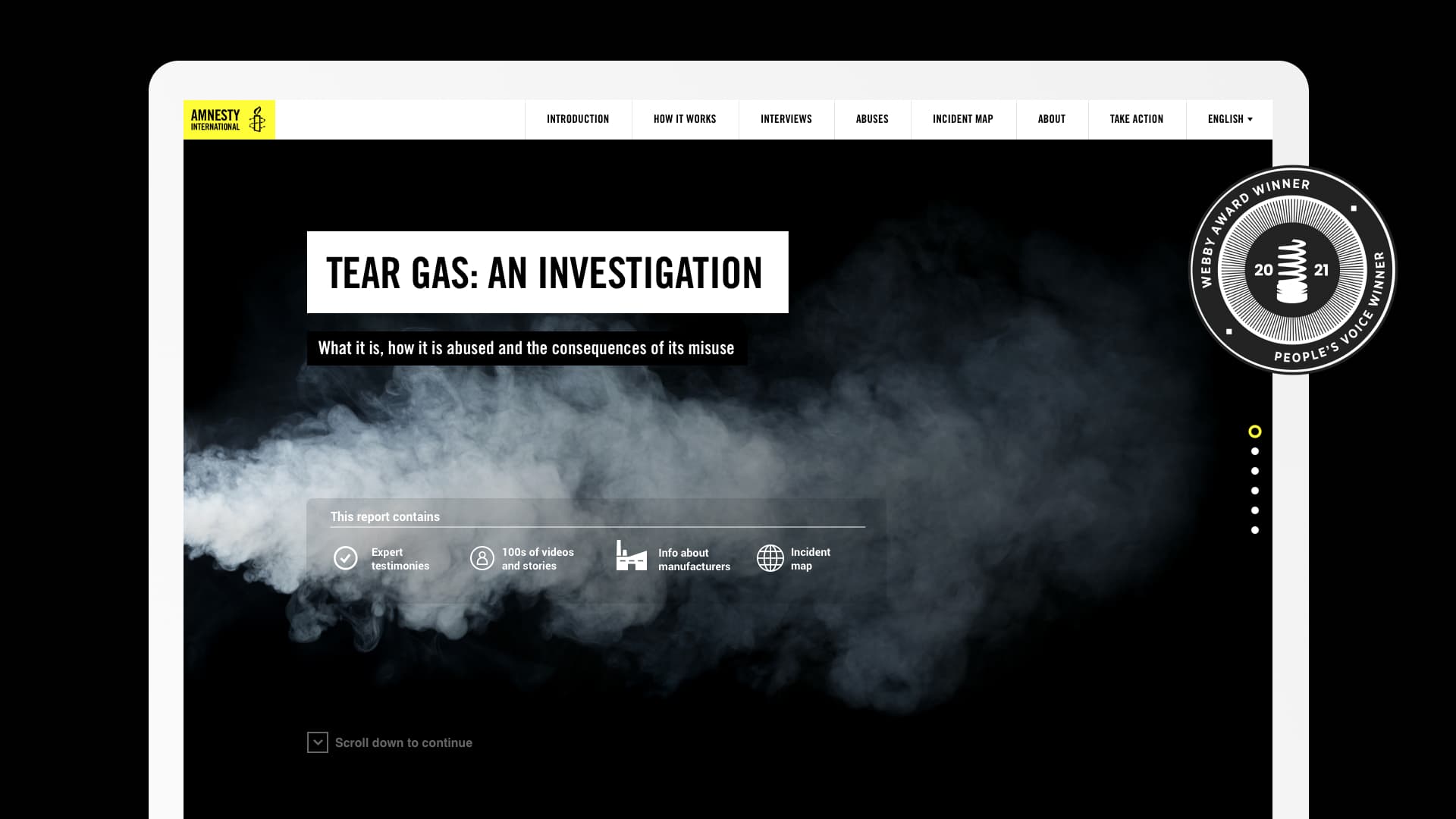
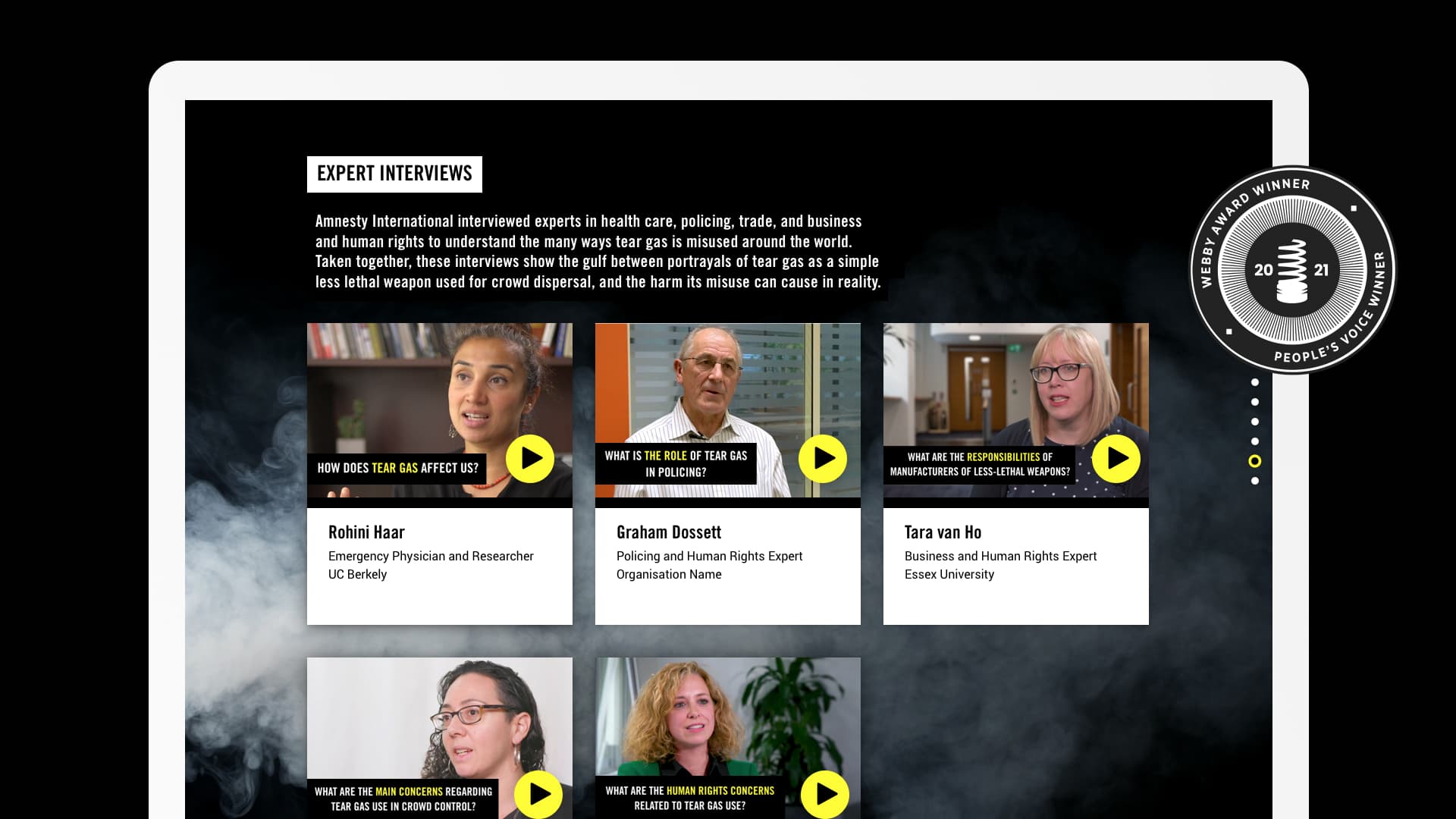
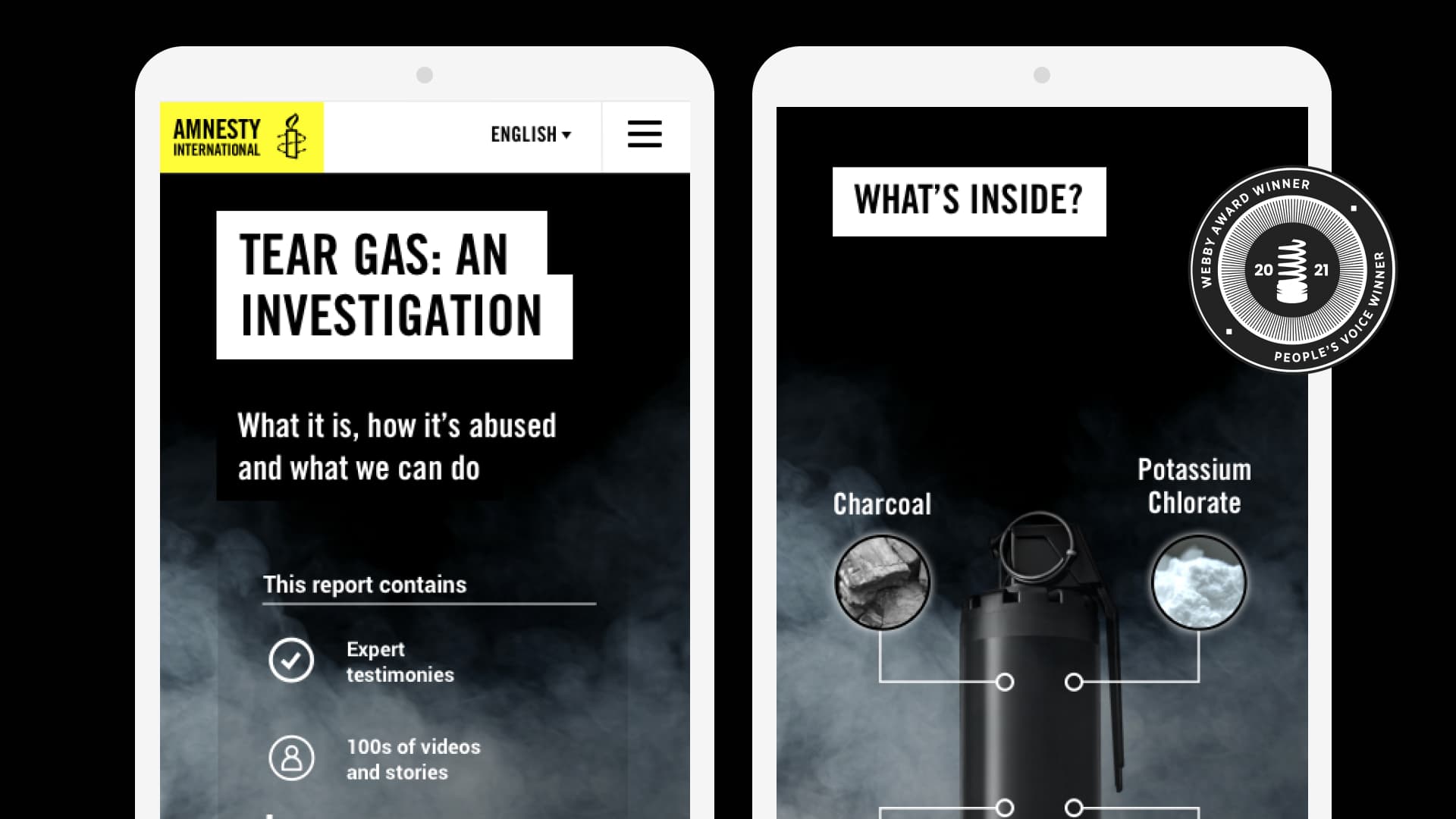
- Created interactive campaign websites like Tear Gas: An Investigation using scrollytelling and data visualisation
- Built high-fidelity prototypes and tested with researchers and volunteers to identify usability issues
- Developed community support systems using forums for task flagging and discussion
Solution
A crowdsourcing platform that breaks complex research into simple micro-tasks volunteers can complete in minutes. The platform handles everything from satellite imagery analysis to document verification, with built-in quality controls and community features to keep volunteers engaged. Alongside this, interactive campaign websites present investigation findings through immersive storytelling and data visualisation.
Outcomes
- 'Tear Gas: An Investigation' won a Webby and multiple digital journalism awards
- Amnesty Decoders engaged 50,000+ volunteers in human rights research
- Volunteers from 150 countries processed more than 1.5 million tasks
- Digital reports reached millions and influenced policy discussions globally
Learnings
- Breaking complex research into micro-tasks made human rights work accessible to anyone with an internet connection
- Community features and forums were essential for volunteer retention and data quality
- Collaborative design with researchers ensured the platforms served real investigation needs